


2026 ASVAB Practice Test Prep
4.343.00 Reviews
App Specs
- Version
- 1.3.4
- Updated On
- License
- Free
- Downloads
- 10,000+
- Developer
- UNISOFT VIET NAM TECHNOLOGY JOINT STOCK COMPANY
- Categories
- Education
- Platform
- Android
Screenshots
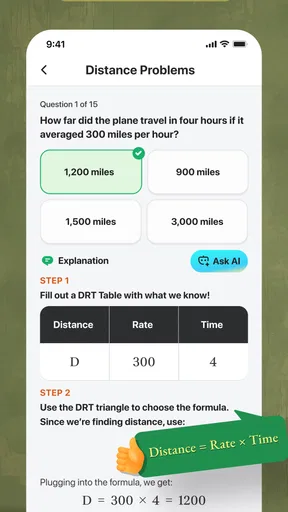
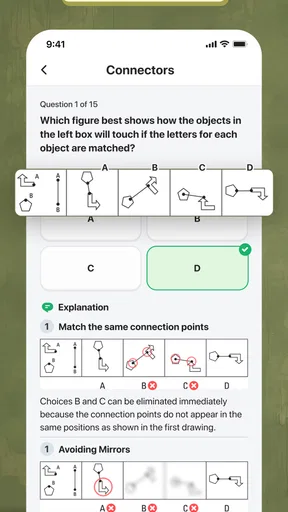
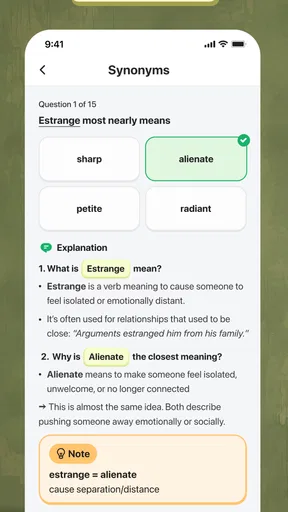
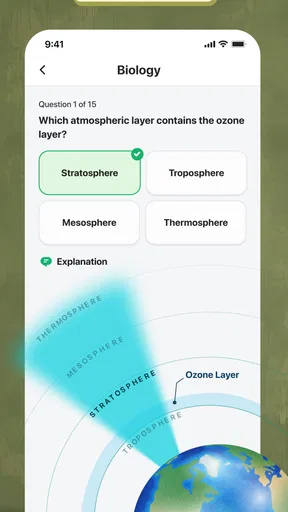
 Analysis by AppCompare
Preparing for the ASVAB can be difficult to fit around work, school, family responsibilities, and ordinary household interruptions. I tested 2026 ASVAB Practice Test Prep with that reality in mind, rather than treating it like a simple collection of multiple-choice questions. It is a free Education app from UNISOFT VIET NAM TECHNOLOGY JOINT STOCK COMPANY, aimed at people who want a more convenient way to practice for the Armed Services Vocational Aptitude Battery on an Android device.
My first impression was that its value depends less on using it for long study sessions and more on using it consistently. A short practice period while waiting for an appointment, during a lunch break, or after the house has gone quiet can be more useful than promising yourself a large study block that never happens. The app’s store summary focuses on passing the ASVAB, but my experience suggests a more realistic goal: use it to identify weak areas, build familiarity with question wording, and make revision part of your routine.
How it fits into a shared household routine
The most practical scenario is a shared device or a busy home. Imagine a student using a parent’s phone after dinner, completing a few questions before the device is needed for messages or other tasks. That arrangement can work, but only if the learner treats each session deliberately. A practice app is easy to open and easy to abandon, so having a small target before starting—such as reviewing one subject area or checking mistakes from the previous session—makes the time more productive.
I would not treat the app as something several people can casually use under one undifferentiated study history. The important boundary is simple: the person preparing for the ASVAB should keep track of their own results and mistakes. If a sibling or parent also opens the app, their activity can make the learner’s personal progress harder to interpret. A notebook, a private note, or a separate study record is useful when the phone itself is shared.
This is also where the app is more suitable for independent practice than for formal tutoring. A tutor can explain why an answer is wrong, notice hesitation, and change the lesson immediately. The app can give you practice, but it cannot replace that human diagnosis. I found it most helpful as the part of a study plan that keeps skills active between conversations with a teacher, recruiter, mentor, or knowledgeable friend.
Starting without turning setup into a study obstacle
The app is available at no initial cost, which lowers the barrier for someone who wants to try its approach before committing to it. It is rated for Everyone, so it fits a general educational setting, including a household where a parent is helping a teenager organize preparation. That age label should not be confused with exam suitability for every learner, though. The ASVAB itself demands serious preparation, and younger users may still need an adult to help interpret the purpose of the practice and keep expectations realistic.
Compatibility is fairly broad for Android users because the app requires Android 7.0 or later. That matters in a shared household where the available phone may not be recent. Before planning a long study routine, I would still open the app on the actual device and check how comfortable the screen, typing, and navigation feel. A technically compatible phone can still be awkward for extended reading if its display is small or its battery is unreliable.
Worth Reading Before You Choose

Flipboard Shows What News Apps Must Do Beyond the Feed

Switching to Android Auto Means Rethinking Your Driving Routine

Google Calendar Makes a Crowded Week Easier to Manage

Ludo King Makes the Most of the Minutes Between Plans

Baby Panda World Brings Quick Play to Modern Phones, but Its Game Library Feels Busy

ESPN’s Live Game View Makes Following Close Games Easier
The current version is 1.3.4. I would make a habit of checking that the installed version is current before beginning an important revision cycle, especially if the app is being used on a device that several family members update at different times. Keeping the software consistent helps avoid confusion when one person sees a different interface from another, although I would never assume that an update changes the underlying quality of the study material without checking it directly.
There is an important financial boundary as well. The app is free to download, but in-app purchases range from around ten dollars to around eighty dollars per item. That is a meaningful difference for a household budget. I recommend deciding in advance whether you are only testing the free experience or whether a paid item is genuinely justified by the learner’s needs. Do not hand a shared phone to a younger user without discussing purchases first, and do not treat a payment as a substitute for a study plan.
Coordinating practice when more than one person is involved
One useful way to use the app at home is to separate responsibility from supervision. The learner should answer the questions and record the areas that caused trouble. A parent, partner, or roommate can help protect a regular time slot, but should not turn every session into an inspection. That distinction matters because exam preparation works better when the learner can make mistakes without feeling watched.
I found a simple three-step routine more effective than repeatedly opening random practice material. First, choose one narrow goal before starting. Second, finish the session without immediately guessing that a difficult question represents a general lack of ability. Third, write down the reason for each missed answer in plain language. Was the problem vocabulary, arithmetic, reading speed, or misunderstanding the question? This turns the app from a question dispenser into a source of study decisions.
For a shared device, I would add a fourth step: close the session with a brief note containing the learner’s name or initials and the topic studied. That is not a feature of the app; it is a household workaround that prevents one person’s activity from being mistaken for another’s. It also makes coordination easier when a family member wants to ask, “What should we review next?” without taking over the learner’s preparation.
Another non-obvious trade-off is timing. A short session in a noisy room may be useful for quick recall, but it is a poor setting for judging reading comprehension or concentration. If the household is busy, use interruptions for smaller tasks and reserve longer, quieter periods for questions that require careful reading. This prevents the app from unfairly appearing harder simply because the environment is working against the learner.
What the rating and audience suggest
The app has an average rating of 4.3 from around 330 ratings, along with around 40 written reviews. That gives me enough public feedback to see that it has attracted real interest, but not enough to treat the score as a guarantee for every type of ASVAB candidate. Ratings are especially limited as a guide when users have different goals: one person may want quick daily drills, while another expects a complete, structured course with detailed explanations.
Its reach is still modest, with over ten thousand installs. I see that as a reason to approach it as a focused tool rather than an established replacement for every major ASVAB preparation method. A smaller user base does not automatically make an app poor, but it does mean I would personally test the material against my own needs before paying for anything inside it.
The Everyone content rating makes the app approachable for households, but trust should come from supervision and communication rather than from the label alone. If a teenager is using a parent’s device, the adult should explain what the app is for, agree on when it can be used, and make clear that purchasing anything requires permission. If an adult candidate shares a phone with children, the same rule works in reverse: keep the study activity and payment decisions separate from casual use.
I also would not assume that an age rating tells you whether the learning style is appropriate. A younger user may be able to navigate the app but still need help understanding military-career context, exam strategy, or the difference between practicing questions and meeting official eligibility requirements. The app can support preparation; it should not be presented at home as a promise of a particular result.
Where it is stronger than ordinary alternatives
Compared with printed practice books, an app is easier to carry and easier to use in small pieces of time. That is its clearest advantage for me. A book is better when I want to annotate a page, compare several explanations at once, or study without a charged phone. The app is better when I want to turn an unexpected ten-minute gap into active practice.
Compared with general web searches, a dedicated ASVAB practice app keeps the activity centered on the exam instead of sending the learner through unrelated pages, advertisements, and conflicting explanations. That focus reduces friction. However, web resources and library materials can still be better for building a concept from the beginning, especially in mathematics or vocabulary. If I repeatedly miss the same kind of question, I would leave the app and learn the underlying topic elsewhere rather than simply answering more examples.
Compared with a full tutoring program, this app is likely to be more flexible and less demanding to schedule, but less capable of adapting to a learner’s personal misunderstanding. That is not a flaw unique to this product; it is the normal trade-off between self-guided practice and instruction. I would choose the app for repetition and habit-building, then add a teacher or structured course if the learner cannot explain why answers are correct.
One particularly useful workflow is to use the app for diagnosis rather than entertainment. Do not chase a long run of correct answers by avoiding difficult areas. Instead, deliberately return to topics that feel uncomfortable and record patterns across several sessions. The important result is not the emotional boost of one good attempt; it is discovering which skills remain unreliable when the questions are unfamiliar or the household is distracting.
Limitations I noticed before recommending it
The app’s purpose is narrow, which is both its appeal and its limitation. Someone looking for broad academic learning, official enlistment guidance, or a complete personal coaching system should not expect this app alone to cover those needs. It is designed around ASVAB practice, so its usefulness depends on whether that is your immediate goal.
I would also be cautious about interpreting practice performance too confidently. A correct answer can come from recognition or guessing, while a wrong answer can result from rushing. After each session, I recommend explaining the answer aloud or in writing. If you cannot explain it, count the question as something to review even if the selected option happened to be correct.
The free entry point is helpful, but the range of optional purchase prices means households should pay attention to the moment when a free trial becomes a spending decision. I would not buy the most expensive item simply because exam preparation feels urgent. First identify the exact problem you are trying to solve, then decide whether the paid material addresses it better than a book, tutor, or free educational resource.
Shared-device use can create another kind of friction: privacy and concentration. Even without inventing special account features, the practical issue is clear. A learner may not want every mistake discussed by the family, and another person may accidentally interrupt a timed or focused session. Agreeing on a quiet place and a personal study record is more reliable than expecting the app to manage household boundaries for you.
Who should use it, and who should choose something else
I would recommend it to an ASVAB candidate who wants accessible practice on Android, prefers short sessions, and is willing to take responsibility for reviewing mistakes. It is also a reasonable starting point for a family helping someone prepare, provided the learner remains in control of the work and adults handle spending decisions carefully.
I would be less enthusiastic for someone who needs detailed teaching from the ground up, a formal calendar, or direct feedback from an instructor. That person may be better served by a structured course or tutoring, using this app only as extra practice. I would also suggest a printed resource for anyone who studies better away from screens or uses an older shared phone that is uncomfortable for extended sessions.
For candidates close to an exam date, the app can help maintain momentum, but I would avoid cramming exclusively through repeated questions. A better approach is to alternate practice with review of the relevant concepts, then return to the app to check whether the correction holds. That cycle exposes shallow memorization and makes each session more informative.
My household verdict
After using it as a practical study companion, I see 2026 ASVAB Practice Test Prep as a convenient starting point rather than a complete preparation solution. Its free access, Everyone rating, Android compatibility, and focused purpose make it easy to introduce into a household routine. The app is most valuable when the learner uses it intentionally, records weak areas, and treats each question as feedback instead of a score to chase.
The developer, UNISOFT VIET NAM TECHNOLOGY JOINT STOCK COMPANY, has produced an app that fits the everyday reality of mobile study: short sessions, flexible timing, and no need to carry a book. Its public average of 4.3 is encouraging, while the still-growing install base tells me to judge the experience personally rather than rely on popularity alone.
My final advice is straightforward. Try the free experience first, establish who is using the device, keep study records separate, and set a household rule that no in-app purchase happens without the owner’s agreement. If the questions help you identify and repair weaknesses, keep it in your routine. If you need explanations, accountability, or a complete course, pair it with a stronger learning resource. The app works best as a disciplined practice tool, not as a promise that practice alone will guarantee an ASVAB result.
Pros
- Covers all major ASVAB sections in one app.
- Practice questions help identify weak subject areas.
- Short quizzes make study sessions easy to fit into a busy schedule.
- Useful for reviewing key math
- science
- and verbal concepts.
- Progress tracking can help maintain a consistent study routine.
Cons
- Some advanced features may require a paid subscription.
- Question difficulty may not always match the official ASVAB.
- Explanations can feel brief for users needing step-by-step instruction.
- The app may not fully replace books or instructor-led preparation.
- Ads or upgrade prompts may interrupt free study sessions.
FAQs for 2026 ASVAB Practice Test Prep
What is 2026 ASVAB Practice Test Prep?
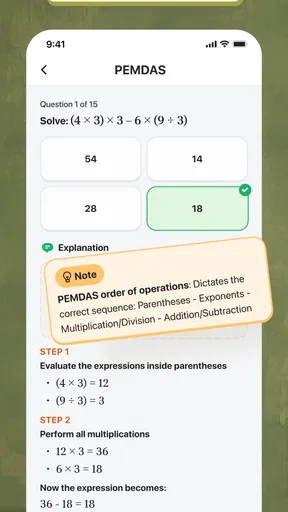
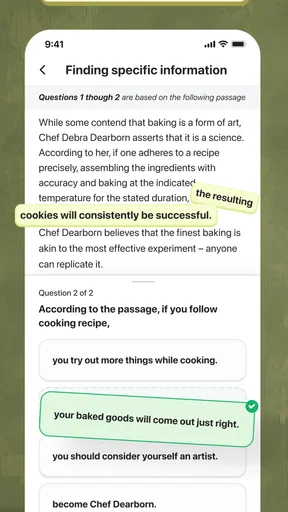
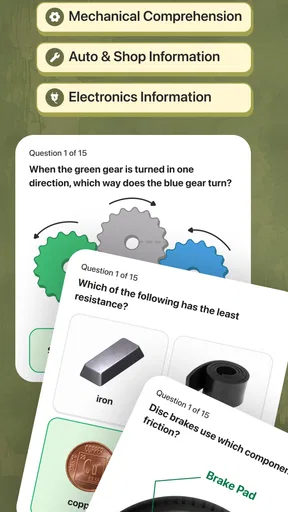
2026 ASVAB Practice Test Prep is a study app designed to help users prepare for the Armed Services Vocational Aptitude Battery. It typically includes practice questions, timed quizzes, explanations, and subject-based review for areas such as mathematics, word knowledge, paragraph comprehension, science, and mechanical concepts. It is intended as a preparation aid, not an official military testing service or a replacement for guidance from a recruiter.
Does the app cover all sections of the ASVAB?
The app is designed to cover the major ASVAB subjects and may organize them into individual practice categories so you can focus on weaker areas. Depending on the version, some sections may receive more attention than others, and the content may not perfectly match every question or format used on the official exam. Check the in-app subject list and current description before relying on it as your only study resource.
Can beginners use 2026 ASVAB Practice Test Prep?
Yes. Beginners can use the app to become familiar with ASVAB-style questions, identify knowledge gaps, and build a regular study routine. A useful approach is to begin with untimed practice, read every explanation carefully, and then move to timed tests after understanding the basics. Users who have been away from school for a while may also benefit from a textbook, classroom course, or additional official preparation materials.
Does the app work without an internet connection?
Offline availability can depend on the specific version, device, and content included in the app. Some practice questions may remain accessible after installation, while features such as advertisements, progress synchronization, updates, or certain explanations may require an internet connection. Before studying in a location without reliable service, open the app, download any available materials, and test the main practice modes in advance.
Is 2026 ASVAB Practice Test Prep enough to guarantee a high score?
No study app can guarantee a particular ASVAB result. Your score depends on your existing knowledge, preparation time, test-taking skills, and performance on the actual examination. This app can be useful for repeated practice, timed drills, and reviewing mistakes, but it should be combined with consistent study and trustworthy resources. Always confirm current testing information, eligibility details, and official requirements through a military recruiter or authorized source.


